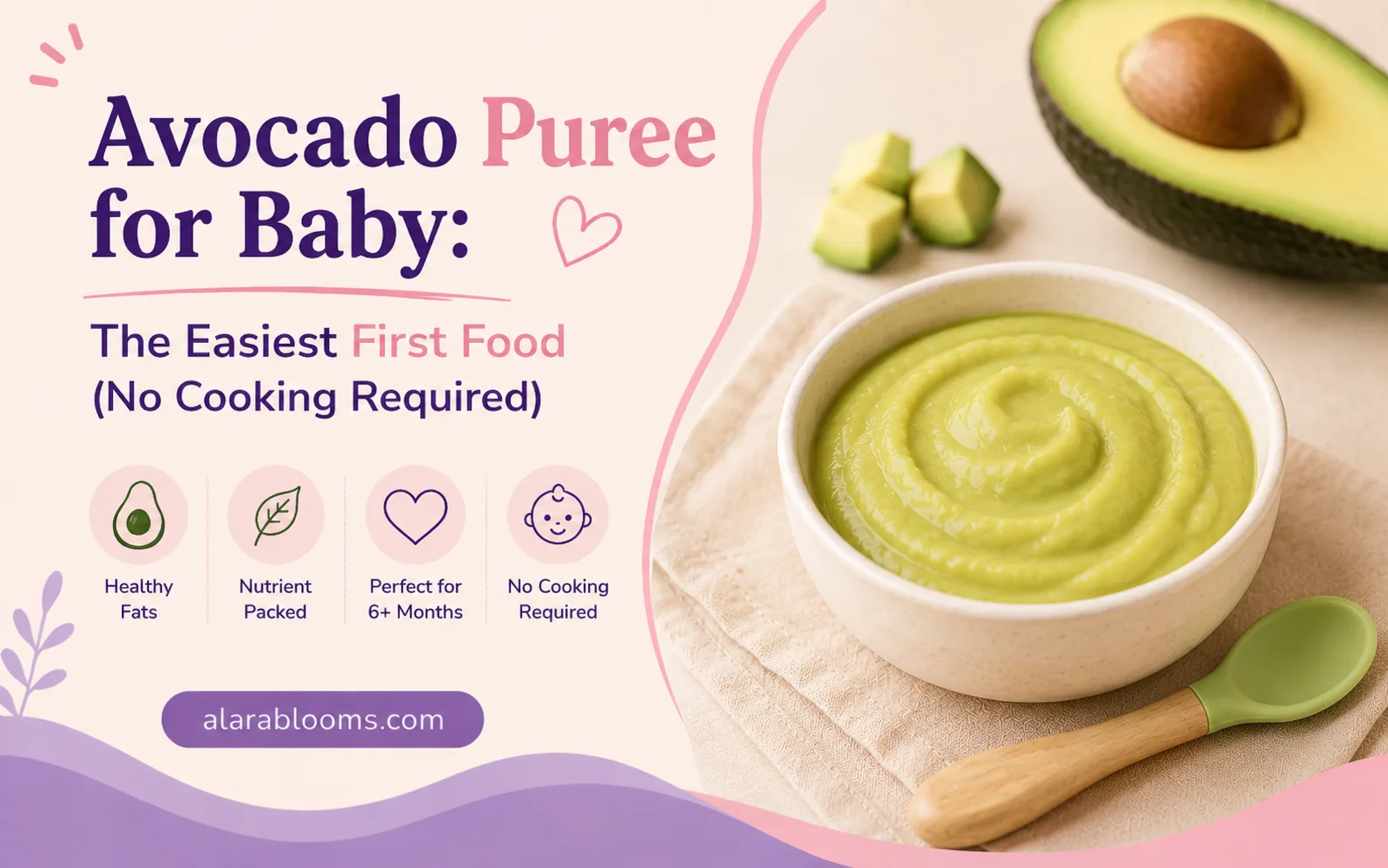
If you're looking for the single most convenient first food for baby, avocado is a strong contender. There's nothing to cook, nothing to cool down, and very little to clean up. A ripe avocado mashes into a perfectly smooth, creamy texture in under two minutes — a texture that most babies take to immediately, especially when mixed with a little breast milk or formula to thin it out.
Beyond convenience, avocado is nutritionally remarkable. It's one of the few plant foods that's rich in healthy fat, which makes it unusual as a baby food and valuable for exactly that reason. Baby's brain more than doubles in size during the first year of life, and that rapid development depends heavily on dietary fat.
Why Avocado Is Perfect for Babies
The biggest nutritional story with avocado is its healthy fat content. Avocados are rich in monounsaturated fats — the same type found in olive oil — which are critical for brain and nervous system development in the first year. About 60% of the brain is made up of fat, and dietary fat during infancy directly supports that growth.
Beyond fat, avocado provides folate for cell development, potassium (more per gram than banana), vitamin K, and a range of B vitamins. It also contains fiber that supports healthy digestion without causing the constipation that some other early foods can trigger.
The texture is another major advantage. A perfectly ripe avocado mashes into a naturally smooth, slightly creamy consistency that closely resembles the texture of breast milk or formula — which is what baby's mouth and tongue know. This familiarity in texture can make early feeding smoother and more successful.
When Can Babies Eat Avocado?
Avocado is appropriate starting at 6 months, when most babies are developmentally ready for solid foods. Look for the key readiness signs: steady head control, ability to sit with minimal support, loss of the tongue-thrust reflex, and clear interest in food. Some babies may be ready slightly before 6 months, but solid foods are generally not recommended before 4 months under any circumstances.
Avocado is not a common allergen and is generally considered a very low-risk first food. That said, always introduce it on its own — without other new foods added on the same day — so that if any reaction occurs, you know the source.
How to Pick a Ripe Avocado
The ripeness of the avocado makes a significant difference. An underripe avocado is firm, difficult to mash, and has a slightly bitter taste. An overripe one may have brown stringy patches inside. You want one that's just right: yields gently to pressure when squeezed (similar to a ripe peach), dark green to nearly black on the outside, and has flesh that is uniformly pale green to yellow without brown spots.
If all you can find are hard avocados, leave them on the counter at room temperature for 2 to 4 days. To speed up ripening, place the avocado in a brown paper bag with a banana — the ethylene gas the banana releases accelerates ripening significantly.
How to Make Avocado Puree for Baby
Slice the avocado in half lengthwise, running the knife around the pit. Twist the two halves apart. Remove the pit carefully using a spoon (not by striking it with a knife, which is a common cause of kitchen injuries). Scoop the flesh out of each half using a large spoon. You want the flesh in one smooth piece — it will mash more evenly.
For stage 1 babies, place the flesh in a small bowl and mash vigorously with a fork until no lumps remain. For an even smoother result, blend in a small blender or food processor for 20 to 30 seconds. A fork-mashed avocado works perfectly well for most babies — the flesh is soft enough that the fork does a thorough job with minimal effort.
Add breast milk, formula, or cooled boiled water a teaspoon at a time, stirring after each addition, until you reach the consistency that's right for your baby's stage. For a first-time eater (stage 1), aim for something slightly pourable — thinner than you might expect. As baby gets older and more experienced, you can leave it thicker and lumpier.
Avocado for Baby-Led Weaning
BLW tip: For baby-led weaning, cut the avocado into long spears about the length and width of two adult fingers placed side by side. Leave the skin on one edge — it acts as a natural grip handle so baby can hold the slippery flesh. You can also scrape the surface of the flesh with a fork to create texture that makes it easier to grip. Avocado is soft enough to be safe for BLW from 6 months, as it mashes easily between the gums with no chewing required.
Flavor Combinations to Try
Plain avocado is mild and well-accepted by most babies. Once baby is comfortable with it on its own, mixing it with other foods adds variety, nutrition, and flavor range. These combinations all blend together easily without any cooking.
Avocado Combinations
- Avocado + banana — ultra-creamy and naturally sweet; one of the easiest combinations to mash together
- Avocado + sweet potato — mash together for a filling, nutrient-dense meal combining healthy fat and beta-carotene
- Avocado + pea — blend steamed peas with mashed avocado for a protein and fat combination
- Avocado + mango — bright tropical flavor; mash ripe mango with avocado for a fruit-forward combination
- Avocado + Greek yogurt — once dairy is introduced; adds protein and a slight tang that complements the mild avocado
Does Avocado Turn Brown? How to Store It
Yes — avocado oxidizes quickly once the flesh is exposed to air, turning brown within 30 to 60 minutes. This is a natural chemical reaction (not spoilage) and the browned avocado is still safe to eat, though the texture and flavor may be slightly off.
Storage tip: To slow browning, press plastic wrap directly against the surface of the mashed avocado (removing all air contact) and refrigerate immediately. A squeeze of lemon or lime juice also slows oxidation significantly. Refrigerate for no more than 1 to 2 days. Avocado does not freeze well — the fat content changes texture on thawing, resulting in a watery, stringy consistency. Fresh is always best with avocado. When in doubt, make a small amount fresh at each meal rather than batch-preparing in advance.
Common Questions
Can babies eat avocado every day?
Yes, there's no reason babies can't have avocado daily as part of a varied diet. The fat content is healthy and important for development — it will not cause weight problems. That said, dietary variety matters, so rotate avocado with other nutritious foods rather than relying on it as the sole food at every meal.
Is avocado fattening for babies?
No. The concept of "fattening" as applied to adults doesn't translate to infants in the same way. Babies need substantial fat intake for brain development and overall growth. The monounsaturated fats in avocado are precisely the type associated with healthy development. Restricting fat at this age is counterproductive and not recommended by pediatricians.
Track Every New Food You Introduce
Log each new food, note how your baby responded, and build a complete solid food history — all in Alara Blooms.
Start Tracking Free