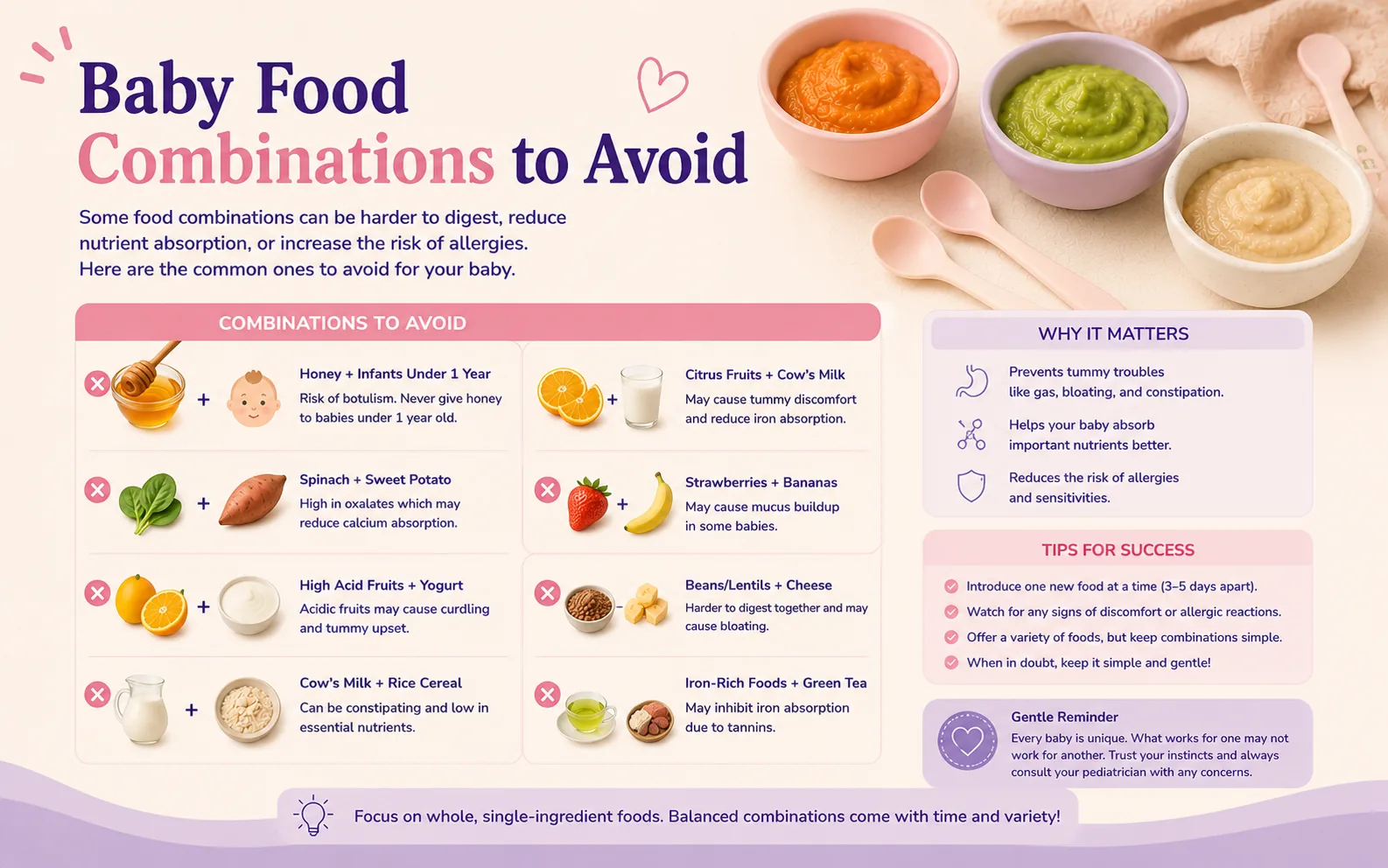
You've got the blender out, the produce washed, and a growing list of ingredients to try. But before you start mixing, it's worth knowing which combinations can work against you — and which are genuinely risky. The rules aren't complicated, and most of them have a simple reason behind them.
Combinations to Avoid (and Why)
This one is non-negotiable. Honey — even raw, organic, or local — can contain spores of Clostridium botulinum, which causes infant botulism. Babies under 12 months cannot fight these spores the way adults can. Never add honey to baby food, tea, or anything else before their first birthday. No exceptions.
Baby kidneys can't process salt the way adult kidneys can. Adding even a small pinch of salt to homemade baby food puts unnecessary strain on their kidneys. Skip it entirely — babies genuinely don't need salt, and their palates aren't expecting it. Flavor with herbs and spices instead (after 6 months).
Cow's milk should not be given as a drink before 12 months, but small amounts mixed into purees (after 6 months) are generally considered fine. Before 6 months, stick to breast milk or formula as the liquid for thinning purees. Cow's milk proteins can be hard for young babies to digest and may cause iron deficiency.
Spinach, beets, carrots, green beans, and squash are high in naturally occurring nitrates. For babies under 6 months, very large amounts of these can interfere with how red blood cells carry oxygen. After 6 months, their digestive systems can handle nitrates normally — so carrot and spinach purees are absolutely fine for older babies. Just avoid introducing them as a primary food before 6 months.
The top allergens are: peanuts, tree nuts, eggs, dairy, wheat, soy, fish, and shellfish. Don't combine two new allergens in the same meal — introduce each one separately with a 3–5 day wait between introductions. That way, if baby reacts, you know exactly which food caused it. Once each allergen is cleared, combining them is fine.
This includes white sugar, brown sugar, maple syrup, agave, and concentrated fruit juice. Added sugar isn't just unnecessary for babies — it primes their palate for sweetness and makes them less likely to accept vegetables and savory foods later. Fruit-based purees are naturally sweet enough without adding anything.
Citrus fruits (oranges, lemons, grapefruit) and tomatoes are acidic and can cause rashes around the mouth and diaper area in young babies whose digestive systems aren't fully developed. They're not dangerous, but worth waiting on until around 8–10 months and introducing gradually.
Unpasteurized juices, cheeses, and dairy products can contain harmful bacteria like Listeria, E. coli, and Salmonella that are particularly dangerous for babies. Always use pasteurized products in homemade baby food.
Note: These guidelines apply to homemade baby food. When in doubt about any ingredient, always check with your pediatrician before introducing it.
What About Spices?
Good news — most mild spices and herbs are completely safe after 6 months and can make baby food genuinely delicious. Cinnamon, turmeric, cumin, ginger (small amounts), basil, mint, and dill are all fine. Avoid chili, cayenne, and very hot spices — not because they're dangerous, but because they're overwhelming for a new palate.
Safe Combinations to Try
Once you know what to avoid, the list of safe and nutritious combinations is long. Here are some to get you started:
Safe combinations you can introduce confidently
- Sweet potato + cinnamon + apple
- Pea + pear + mint
- Carrot + ginger + butternut squash
- Avocado + banana
- Spinach + mango + banana (after 6 months)
- Oatmeal + blueberry + banana
- Chicken + sweet potato (after 6 months)
Track Every New Food You Introduce
Log when you introduce new foods, track reactions, and build a complete solid food history with Alara Blooms.
Start Tracking FreeQuick Rule of Thumb
When in doubt: one new ingredient at a time, 3–5 days between introductions, and nothing with added salt, sugar, or honey before 12 months. Once you've cleared an ingredient, it's safe to combine freely. Keep a log of what baby has tried and any reactions — it makes tracking introductions much easier and gives you a clear record to share with your pediatrician.