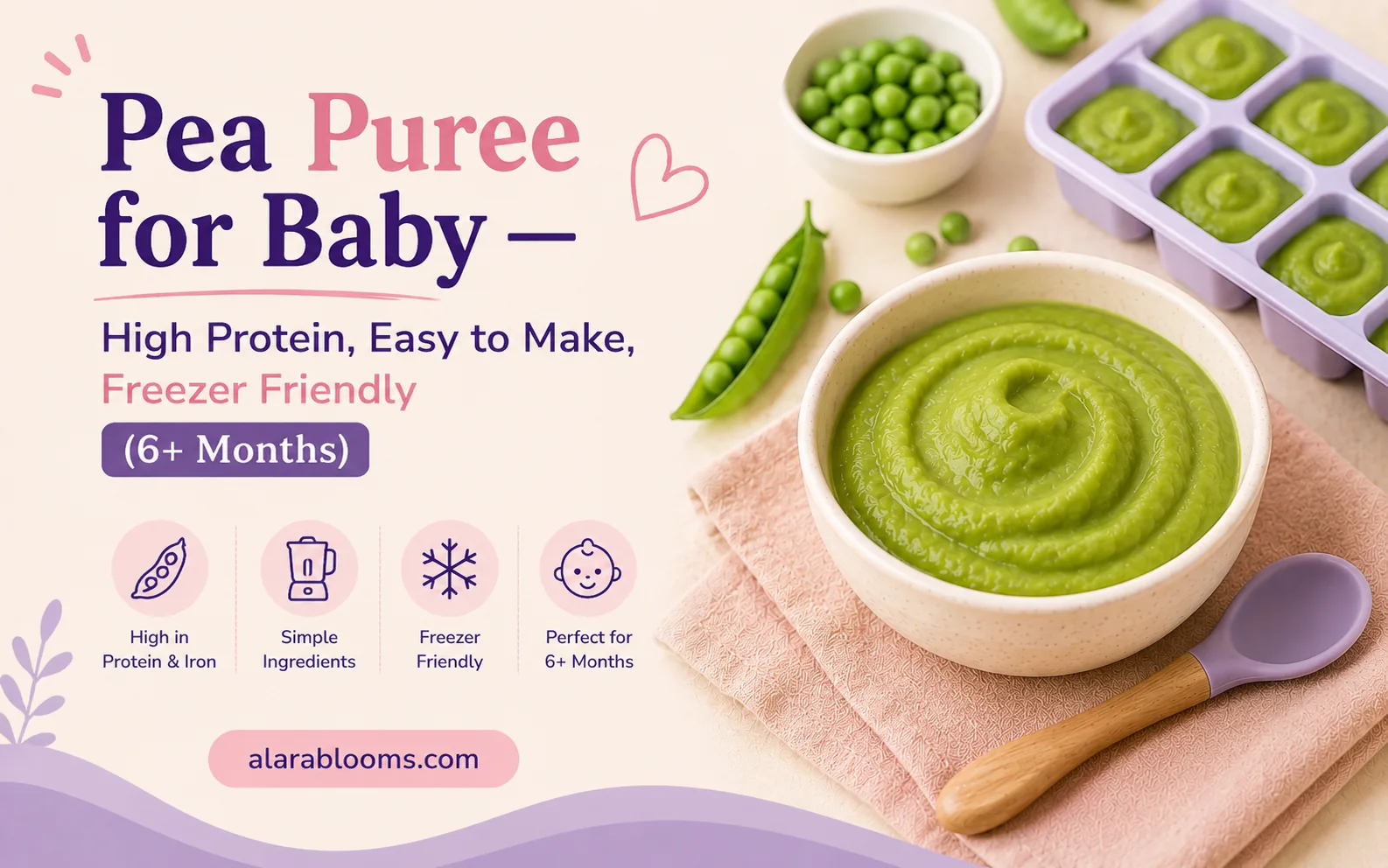
When most parents think about baby's first foods, they picture sweet potato or banana — naturally sweet, familiar, easy to accept. Peas are a different proposition entirely. They're green, slightly grassy, and occasionally met with a skeptical face on first offering. But nutritionally, pea puree is hard to beat among vegetable options. If you've been skipping peas because you weren't sure your baby would take to them, this guide will show you how to make them in a way that actually works — smooth, vibrant, and far more accepted than you might expect.
Why Pea Puree Is Underrated
Among vegetable purees, peas are unusually protein-dense for a plant food. A half-cup serving of cooked peas provides around 4 grams of protein — meaningful for a baby whose diet is rapidly expanding beyond milk. Peas also contain non-heme iron (the plant-based form of iron), which is important because iron needs increase significantly at around 6 months as babies' stored birth iron begins to deplete. Pairing pea puree with a vitamin C source — like apple, pear, or a tiny squeeze of orange in an older baby's food — increases iron absorption considerably.
Beyond protein and iron, peas deliver dietary fiber (which supports healthy digestion and helps prevent the constipation that often accompanies the start of solids), vitamin K (important for blood clotting and bone health), folate, and B vitamins including thiamine and niacin. For such a simple, inexpensive food, the nutritional profile is genuinely impressive.
Peas are also one of the few green vegetables that babies tend to accept with reasonable enthusiasm, especially when introduced early in the solid food window before taste preferences calcify. The natural sweetness of fresh or properly cooked frozen peas helps. It's a very different experience from offering a bitter green like kale or spinach.
Fresh vs. Frozen Peas: Which Is Better?
Here's something that surprises many parents: frozen peas are often more nutritious than fresh ones from the grocery store. Peas begin converting their sugars to starch the moment they're picked, and the vitamin degradation that follows is real and measurable. Peas destined for freezing are typically processed within hours of harvest — the heat-blanching and rapid freeze stops the conversion cold and locks in their nutrients and bright color.
Fresh peas from a farmers market, picked that morning, are excellent. But grocery store "fresh" peas, which have often been in transit or sitting on a shelf for several days, are frequently less nutritious than their frozen counterparts. Use frozen peas with complete confidence. They are an entirely valid, often superior choice, and they're available year-round at a fraction of the cost of fresh.
For making puree, frozen peas work perfectly. You don't even need to thaw them before cooking — just add them directly to boiling water or a steamer basket straight from the freezer.
How to Make Pea Puree for Baby
Bring a small pot of water to a boil, or set up a steamer basket. Add frozen peas and cook for 3-5 minutes — just until tender. This is the most important timing note in this entire guide: do not overcook. Peas that are cooked past 5-6 minutes go from bright green to dull olive and lose a significant portion of their vitamin C. You want them fully soft but still vivid. If you're steaming, 4-5 minutes over boiling water is sufficient. Save the cooking water — you may want it for blending.
Transfer the cooked peas to a blender or food processor while still hot (use caution with hot liquids in a blender — vent the lid or use an immersion blender). Add liquid a little at a time — saved cooking water, breast milk, formula, or plain water all work. Blend on high until as smooth as possible. Because of pea skins, the puree will not be perfectly smooth straight from blending, which is why step 3 matters for younger babies.
Pour the blended puree through a fine-mesh strainer, pressing it through with the back of a spoon. This step removes the pea skin fragments that give unstrained pea puree a slightly grainy, gritty texture — a texture many babies reject outright. The strained puree is completely smooth, vibrant green, and far more accepted at the 6-8 month stage. It takes an extra two minutes and makes a significant difference for younger babies. As your baby gets older and more comfortable with texture, you can skip this step.
Why straining matters: Pea skins are thin but don't fully break down in blending. The gritty texture they leave behind is one of the main reasons babies reject pea puree — not the flavor. Straining once takes about 2 minutes and can be the difference between a baby who accepts peas and one who refuses them. If you've tried pea puree before and your baby pushed it out, try straining this time and compare the reaction.
Stage Progression
Pea puree adapts well as your baby's eating skills develop. In the early weeks of starting solids, strain the puree for maximum smoothness. Around 8-10 months, you can skip the straining step and offer a thicker, slightly textured puree that encourages more jaw movement and oral motor development. By 10-12 months, you can offer whole cooked peas that are soft enough to mash between your fingers — these are excellent for pincer grasp practice, since their small round shape is a manageable challenge for developing fine motor skills. Always make sure whole peas are fully cooked to a soft consistency before offering to babies who haven't mastered chewing.
Getting a Vibrant Green Color
A vivid green color is a sign of well-preserved nutrients and an indicator that you haven't overcooked the peas. Two techniques help lock that color in. First, cook the peas only as long as necessary — 3-5 minutes, not a minute more. Second, as soon as they're done, you can briefly plunge the peas into a bowl of ice water for 30-60 seconds before blending. This ice bath halts the cooking process immediately and sets the chlorophyll at its brightest. You don't have to do this step, but if you're making puree to freeze and want it to look as appealing as possible coming out of the freezer weeks later, it's worth the extra minute.
Flavor Combos to Try
Pea Puree Combinations
- Pea + mint: a tiny pinch of fresh or dried mint adds a surprisingly pleasant freshness that many babies enjoy
- Pea + potato: blending in some cooked potato creates an ultra-smooth, creamy texture that's extremely gentle and easy to eat
- Pea + avocado: two nutritional powerhouses together — healthy fats from the avocado complement the protein and iron from the peas
- Pea + sweet potato: the sweetness of the potato makes the pea flavor more approachable; a reliable combo for skeptical babies
- Pea + chicken: a great first protein combination; the mellow pea flavor pairs naturally with a simple chicken puree
- Pea + basil: a small amount of fresh basil introduces an herby note that builds food familiarity with different flavor profiles
Always make sure both ingredients in any combination have already been introduced separately and cleared before mixing them. Once you've confirmed your baby tolerates each food individually, combinations are a great way to increase nutritional variety and keep flavors interesting.
Storage
Pea puree stores well both in the refrigerator and freezer. In the refrigerator, keep it in an airtight container and use within 3 days. For longer storage, freeze in an ice cube tray, then transfer the frozen cubes to a labeled freezer bag. Pea puree keeps in the freezer for up to 3 months at good quality. Thaw overnight in the refrigerator or in a bowl of warm water. Never microwave breast milk to thaw, and always test the temperature of any reheated food on your wrist before serving.
A note about peas and gas: Some babies experience more gas after eating peas, particularly in the early weeks of starting solids when their digestive systems are still adjusting. If you notice your baby seeming gassy or uncomfortable in the hours after eating pea puree, simply introduce it gradually — start with a teaspoon or two and build up slowly over several days. Most babies adjust within a week or two as their gut microbiome adapts to processing new foods.
Track Your Baby's First Foods
Keep a record of every puree your baby tries, note when they loved it, and track their reactions — all in Alara Blooms.
Start Tracking Free