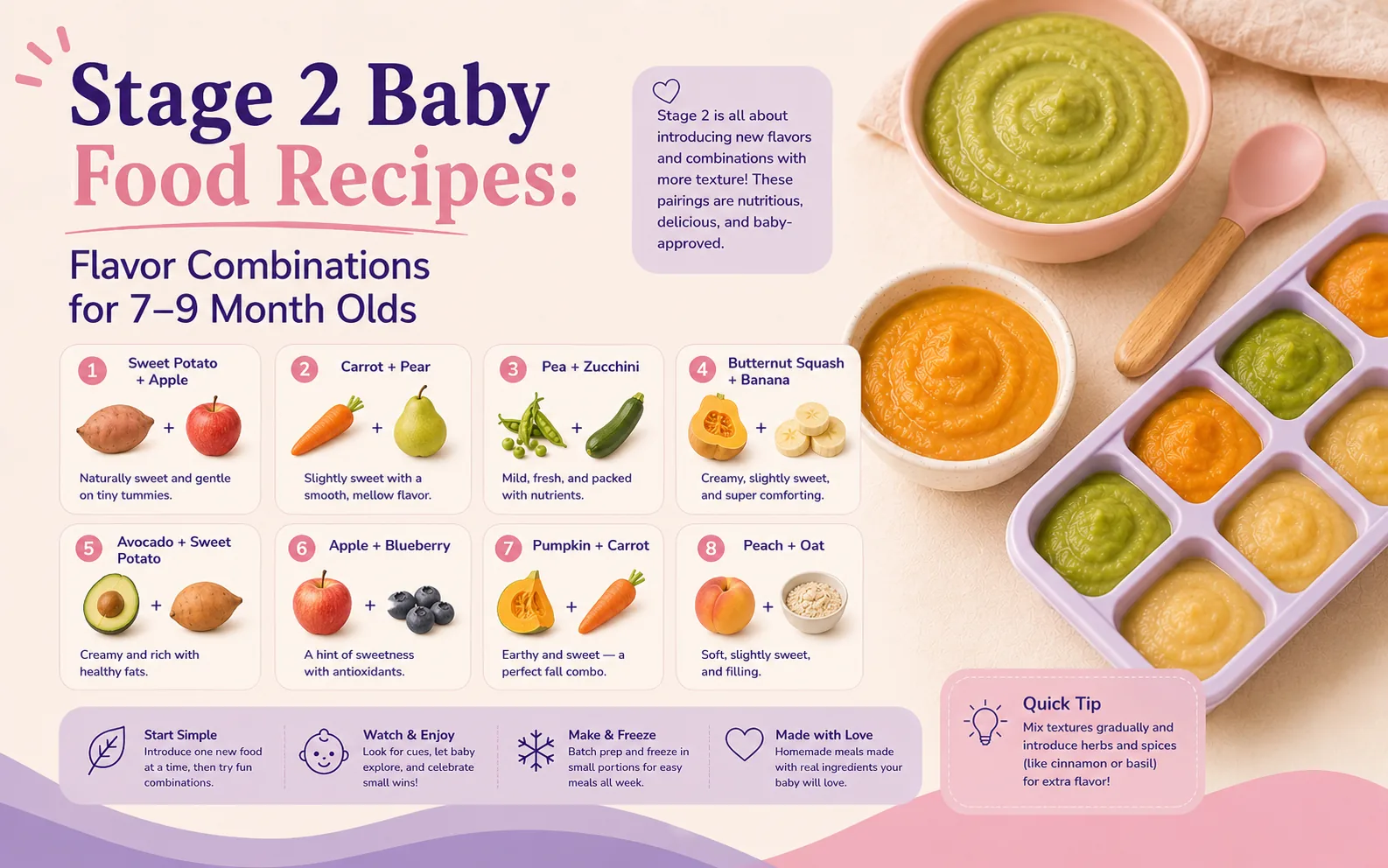
At around seven months, something shifts. Your baby has had a few weeks of single-ingredient purees. They've tried sweet potato, pea, apple, pear. They know what food is now — and they're ready for more. Stage 2 baby food is your signal to start combining, layering flavors, and offering textures that ask a bit more from that developing tongue and palate.
The exciting part about this stage is that it's not just about nutrition. The combinations you introduce now are shaping the palate your child carries for years. Research consistently shows that flavor preferences are learned, and the window between six and twelve months is one of the most potent times to build variety into a baby's diet. The more flavors they meet now, the more adventurous eaters they tend to be later.
What Is Stage 2 Baby Food?
Stage 2 baby food is designed for babies roughly between seven and nine months who have already had some experience with single-ingredient purees. The defining features of stage 2 are:
More than one ingredient. Stage 2 combines two or more foods in a single puree, which means your baby is experiencing how flavors interact — sweet potato mellowed by apple, pea sharpened by mint, lentil deepened by cumin.
Thicker texture. Stage 2 is no longer silky smooth. It may have soft grain, a coarser blend, or a denser consistency. This is intentional — it prepares the mouth for the transition to finger foods and more textured solids that comes at nine to twelve months.
Larger portion sizes. At stage 1, you were offering one to three tablespoons. Stage 2 meals are typically four to six tablespoons, served two to three times a day.
How Stage 2 Differs from Stage 1
Stage 1 is introductory. One food at a time, smooth texture, small amounts. It's designed to help you identify potential allergens or sensitivities and to ease a baby into the concept of eating solids at all. Most babies spend four to eight weeks in stage 1.
Stage 2 assumes the basics are covered. Your baby can handle a spoon, can close their lips around puree without pushing most of it back out, and has already tried a range of single ingredients. Now the goal shifts toward nutritional complexity and palate development. You're introducing combinations, building flavor memory, and gradually increasing portion size as breast milk or formula remains the primary calorie source through nine months.
Why Introducing New Flavors Early Matters
A landmark study published in Pediatrics found that babies regularly exposed to a variety of vegetables in their first year of life were significantly more likely to accept those vegetables at age six. The researchers called this the "flavor window" — a period in infancy when the palate is particularly open to new experiences and the brain is actively building flavor associations.
This doesn't mean you have to stress about every meal. But it does mean the stage 2 window is genuinely valuable. Offering combinations that include bitter, savory, and herby notes — not just sweet — gives your baby a broader reference point for what food tastes like. And that breadth tends to pay off at the toddler table.
Top 10 Stage 2 Flavor Combinations
A classic for good reason. Sweet potato provides beta-carotene and fiber, apple adds natural sweetness and vitamin C, and a pinch of cinnamon introduces a warm, complex note. Roast the sweet potato and steam the apple, then blend together. The cinnamon is a gentle introduction to spice — safe from six months and compatible with most sweet bases.
This combination sounds surprising but works beautifully. Peas are a strong source of plant-based protein and iron. Pear sweetens them and helps balance the grassy note. A few fresh or dried mint leaves give the puree a brightness that babies often respond well to. This is also a great way to introduce green vegetables to a baby who initially resists them — the pear and mint make the pea more approachable.
One of the best early protein combinations. Butternut squash is mild, sweet, and blends to a smooth consistency that makes chicken easier to incorporate. Poach or roast the chicken breast, blend it with cooked squash and a little cooking liquid. The result is a higher-protein meal that keeps hunger at bay longer — useful as your baby moves toward two and three solid meals a day.
Red lentils are one of the most nutrient-dense foods you can feed a baby — high in iron, zinc, and protein. Paired with sweet carrot and a tiny pinch of cumin, this combination mimics the flavor profile of a gentle dal. Cumin is safe from around six months in small amounts and adds an earthy, savory depth that helps babies learn to recognize complex flavors early. Cook lentils until very soft, steam the carrot, blend with a pinch of cumin and enough water to loosen.
One of the easiest stage 2 combinations because neither ingredient needs cooking. Mash ripe avocado and banana together with a fork — no blending required. The fat content of avocado combined with the natural sugar of banana makes this a calorie-dense, easy-to-digest option. The texture is naturally slightly chunky, ideal for stage 2. Serve immediately to prevent browning.
Cook baby oatmeal to a thicker consistency than stage 1 and stir in pureed or mashed blueberries. Blueberries are high in antioxidants and vitamin C, and their tartness creates a more complex flavor than sweeter fruit purees. The oatmeal base also provides iron when you use iron-fortified oats — one of the easiest ways to hit an infant's daily iron requirement. Works well as a breakfast combination.
The cheese makes this one. Broccoli is nutritionally excellent but has a strong flavor that some babies resist. Blending it with sweet potato softens the bitterness, and a small amount of mild cheddar adds a savory, creamy quality that makes the combination genuinely appealing. Steam the broccoli and sweet potato, then blend with a small amount of grated cheddar and a little water or breast milk to loosen.
A green-forward combination more nutritionally dense than it looks. Spinach provides iron, folate, and calcium. Pear sweetens the blend and reduces the iron-like taste of spinach. Avocado adds healthy fat, essential for brain development in the first year. This puree will be bright green — introduce it with confidence and your baby is more likely to accept it.
A tropical combination that offers a different flavor profile than most Western baby food. Blend ripe mango with a small amount of full-fat coconut milk and cooked white rice for a creamy, lightly exotic puree. Coconut milk adds healthy fat and a distinctive flavor that broadens the palate. Works well as a second meal when you want something sweeter but still nutrient-dense.
A mini Sunday roast in puree form. Ground beef or lean beef mince is one of the best sources of heme iron and zinc for babies — nutrients critical for brain development and increasingly hard to get from plant foods alone after six months. Blend well-cooked beef with steamed carrot and boiled potato, using cooking liquid to reach the right consistency. Introduce this combination early to build familiarity with red meat.
How to Make Combo Purees
There are two main approaches to making stage 2 combination purees. The first is to cook each ingredient separately and combine them during blending — this gives you more control over texture and lets you adjust ratios without wasting a whole batch. The second is to cook compatible ingredients together from the start, which creates deeper flavor integration as they cook in the same liquid.
For most combinations, cooking separately first is more flexible. Steam vegetables until very soft (a fork should pierce them without resistance), poach or roast proteins until fully cooked through, then blend everything together with enough liquid to reach your target consistency. Breast milk, formula, or cooking water all work as the base.
Batch cook and freeze in silicone ice cube trays. One cube is roughly one tablespoon, so a four-cube portion is a good stage 2 serving. Freeze within two hours of cooking and use within three months. Thaw overnight in the refrigerator or in a bowl of warm water before serving.
Texture guide: Stage 2 texture should be thicker than stage 1 but still smooth enough to fall off a spoon slowly. Think yogurt or hummus consistency — not perfectly silky, but with no hard pieces. A slight grain or thickness is ideal, but no chunks that could surprise a baby still learning to move food around their mouth. That is stage 3 territory.
Introducing More Protein at Stage 2
By seven to nine months, your baby's iron stores from birth are depleting. Breast milk and formula alone are no longer sufficient iron sources at this stage. This is why stage 2 is the time to build protein-rich combinations into the rotation — meat purees, legume blends, and egg yolk if you haven't introduced it yet.
Meat purees are often lower on parents' priority lists because they're less obvious to prepare, but they are among the most bioavailable iron sources you can offer. Heme iron from meat is absorbed at a significantly higher rate than non-heme iron from plants. Beef, chicken, turkey, and lamb all puree well when cooked until very tender and blended with a vegetable base and enough liquid.
Red lentils are the best plant-based protein for this stage. They cook quickly, blend smoothly, and have a mild flavor that pairs with almost any vegetable. Chickpeas and black beans also work well once strained or blended very smooth.
Introducing Spices and Herbs
Safe spices and herbs for babies 7+ months
- Cinnamon — warming, pairs with sweet potato, apple, oatmeal, banana
- Cumin — earthy, pairs with lentils, carrot, chickpeas, butternut squash
- Garlic (cooked only) — savory, pairs with almost any vegetable or meat combination
- Ginger — warming, pairs with carrot, sweet potato, pear, mango
- Basil — fresh and herby, pairs with tomato, zucchini, and pasta bases
- Turmeric — earthy and mild, pairs with lentils, cauliflower, carrot
- Mint — bright and cooling, pairs with pea, lamb, cucumber, and yogurt-based purees
- Avoid: chili, cayenne, or any significant heat; added salt; added sugar
Start with a very small amount — a pinch of a dried spice or a single fresh herb leaf. Introduce one new spice at a time, just as you would a new food. Most babies respond well to spice introduction, and many develop a genuine preference for the combinations they meet early. The important rule: no heat and no salt.
How Much to Feed a 7–9 Month Old
At seven months, most babies are eating two solid meals a day alongside breast milk or formula feeds. A typical stage 2 meal is four to six tablespoons of puree. By nine months, this often increases to six to eight tablespoons per meal as appetite grows, and three solid meals a day becomes common.
Breast milk or formula should still provide the majority of calories through nine months — typically 24 to 32 ounces per day depending on the baby. Solids at this stage are supplemental, not replacement. Follow your baby's hunger and fullness cues rather than a fixed volume goal. Stop when they turn their head, close their mouth, or show clear disinterest in the spoon.
Track Your Baby's Flavor Journey
Log every new combo you introduce, track what baby loved (and didn't), and build a solid feeding history — all in Alara Blooms.
Start Tracking Free