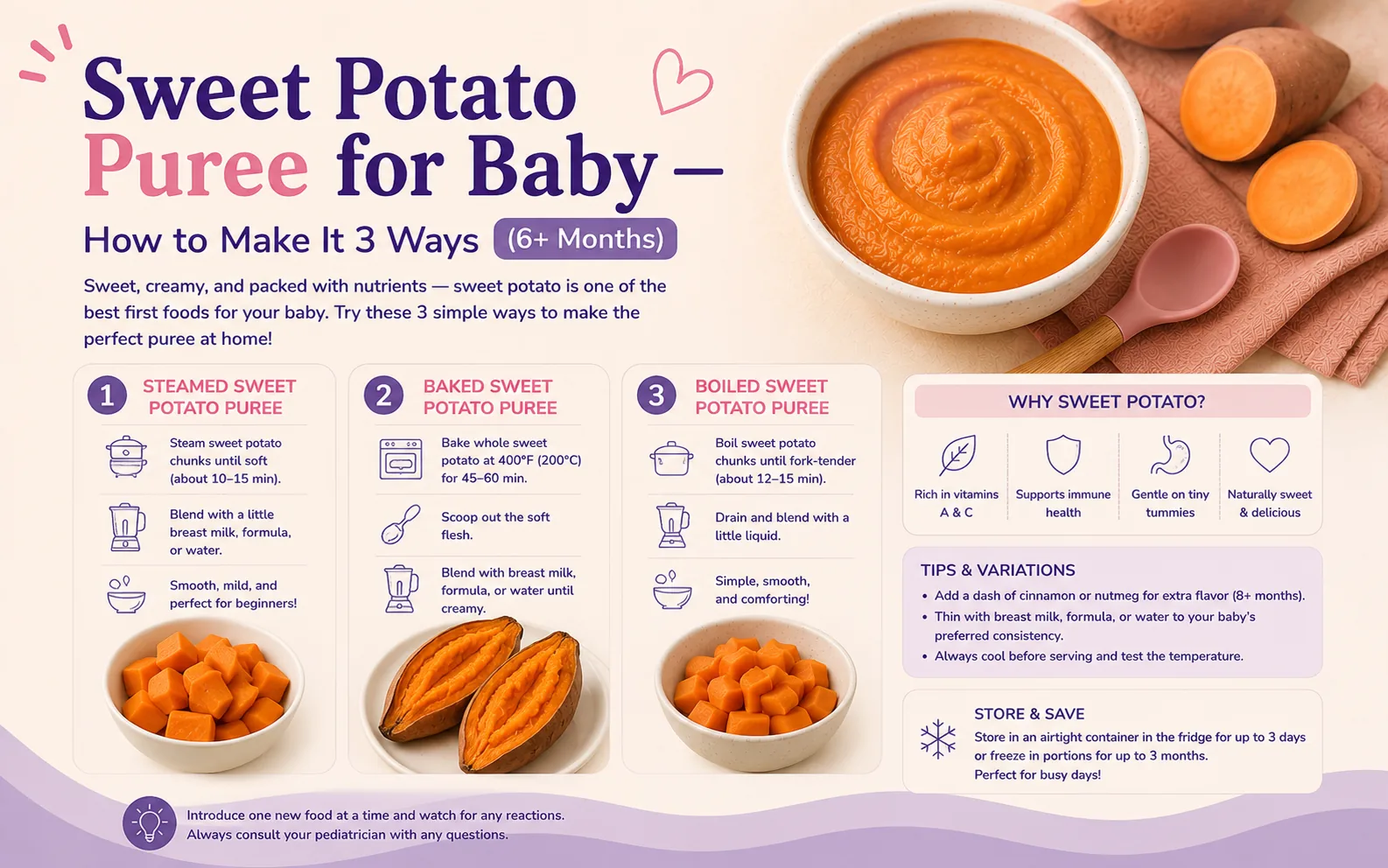
When it comes to starting solids, sweet potato puree consistently tops the list of recommended first foods — and for good reason. It has a naturally mild sweetness that babies tend to accept easily, it blends into an ultra-smooth puree with very little effort, and it delivers an impressive nutritional profile for such a simple vegetable. If you're looking for a reliable, nutrient-dense first food that's easy to make in bulk and store, sweet potato is an excellent place to start.
Why Sweet Potato Is an Excellent First Food
Sweet potatoes are rich in beta-carotene, which the body converts to vitamin A — a nutrient essential for healthy vision, immune function, and skin development. A single medium sweet potato provides more than 100% of an adult's daily vitamin A needs, so even a few tablespoons delivers a meaningful dose for baby.
They're also a good source of vitamin C, potassium, manganese, and dietary fiber. The natural sugars in sweet potato are balanced by that fiber, which means digestion is gentle and steady — not a spike. This is one reason sweet potato tends to be well-tolerated even by babies with sensitive stomachs.
The flavor matters too. Babies are born with a preference for sweetness (breast milk is naturally sweet), which means sweet potato is often accepted on the first or second try — far more easily than green vegetables. Starting with foods that baby accepts confidently helps build a positive relationship with eating from the very beginning.
When to Start Sweet Potato Puree
Most pediatricians and feeding specialists recommend introducing solid foods around 6 months, though some babies may be developmentally ready slightly earlier (no earlier than 4 months). Rather than going by age alone, look for these readiness signs: baby can hold their head up steadily, can sit with minimal support, shows interest in food by watching you eat and reaching toward your plate, and has lost the tongue-thrust reflex that automatically pushes food out of the mouth.
Sweet potato is an excellent choice as one of your very first foods. It doesn't need to be introduced in any particular order — there's no evidence that starting with vegetables before fruit (or vice versa) affects long-term food preferences. The most important thing is introducing one new food at a time and waiting 3 to 5 days before introducing another, so you can identify any reactions.
3 Ways to Make Sweet Potato Puree
All three methods produce great results — the differences are in nutrition retention, depth of flavor, and how much time you want to spend. Choose based on what fits your day.
Peel and cut sweet potato into 1-inch cubes. Place in a steamer basket over an inch of boiling water, cover, and steam for 15 to 18 minutes until completely fork-tender. Transfer to a blender or food processor and blend until smooth, adding the reserved steaming water a tablespoon at a time to reach your desired consistency. Steaming preserves more water-soluble vitamins than boiling, making it the top choice if maximum nutrition is your goal. The flavor is clean and mild.
Preheat oven to 400°F (200°C). Pierce a whole sweet potato several times with a fork and place directly on the oven rack (or on a foil-lined baking sheet). Roast for 45 to 55 minutes until completely soft when squeezed. Let it cool, then scoop the flesh out of the skin. Blend with a small amount of water, breast milk, or formula until smooth. Roasting caramelizes the natural sugars, resulting in a noticeably deeper, sweeter flavor that many babies love. It takes longer but requires almost no hands-on time.
Pierce a whole sweet potato several times with a fork. Microwave on high for 5 minutes, turn it over, and microwave for another 3 to 5 minutes until completely soft when pressed. Let it cool for a few minutes before handling. Scoop the flesh out of the skin and blend with water, breast milk, or formula to reach the right consistency. This method is the fastest — great for days when you need to make food quickly. The flavor is slightly more neutral than roasted, similar to steamed.
Consistency Guide by Feeding Stage
Getting the texture right matters as much as the recipe. What's appropriate at 6 months is very different from what's appropriate at 10 months. Here's how to adjust your sweet potato puree as baby grows.
Stage 1 (6 to 7 months): Very smooth, almost pourable. Add plenty of liquid — water, breast milk, or formula — until the puree runs easily off a spoon. No lumps at all. Stage 2 (7 to 9 months): Thicker, spoonable consistency, similar to thick yogurt. Small soft pieces are okay. Stage 3 (9 to 12 months): Soft mashed texture with small chunks. Baby is learning to handle more texture and developing chewing skills — a lumpier sweet potato mash is ideal at this stage.
Flavor Combinations to Try
Once baby has tried plain sweet potato and tolerated it well, mixing it with other foods is a great way to build flavor variety and nutritional range. These combinations all blend smoothly and tend to be very well accepted.
Sweet Potato Combinations
- Sweet potato + apple — a classic pairing; the tartness of apple balances the sweetness beautifully
- Sweet potato + pear — very smooth and mild; great for babies who need a gentle introduction to fruit
- Sweet potato + carrot — doubles the beta-carotene; blend both together for a vibrant orange puree
- Sweet potato + chicken — a step up to protein; blend cooked shredded chicken with sweet potato puree for a more filling meal at stage 2 and beyond
- Sweet potato + cinnamon — a tiny pinch of cinnamon (no sugar) adds a warm flavor dimension once baby is comfortable with plain sweet potato
How to Store Sweet Potato Puree
Sweet potato puree stores well, which makes it ideal for batch cooking. Make a large batch once or twice a week and you'll always have something ready.
Storage Guide
- Refrigerator: Store in an airtight container for up to 3 days
- Freezer (ice cube method): Spoon puree into a silicone ice cube tray, freeze solid, then transfer the frozen cubes to a zip-lock bag. Each cube is roughly 1 oz. Stays good for up to 3 months.
- Thawing: Thaw overnight in the refrigerator or warm gently in a small pot or bowl set in hot water. Always stir and test the temperature before feeding.
- Do not refreeze previously frozen puree that has already been thawed
Serving Sweet Potato for Baby-Led Weaning
If you're doing baby-led weaning (BLW) rather than purees — or doing a combination of both — sweet potato works beautifully as a finger food too. Roast sweet potato wedges (skin on to help them hold their shape) at 400°F for 25 to 30 minutes until the flesh is completely soft when pressed. The wedge should be the approximate length of baby's fist so they can grip it easily. The outside edge gives grip, and baby mashes the soft interior against the roof of their mouth. Always supervise closely and never offer raw or only lightly cooked sweet potato, which is hard and a choking hazard.
Signs of Sweet Potato Allergy
Sweet potato allergy is rare but possible. After introducing sweet potato for the first time, watch for these signs over the following 24 to 48 hours: hives or a rash around the mouth or body, vomiting, unusual fussiness, swelling around the mouth or throat, or difficulty breathing. Mild reactions (a small red rash around the mouth) can sometimes be contact irritation rather than a true allergy. If you notice any concerning symptoms, contact your pediatrician before offering sweet potato again. Severe reactions require immediate medical attention.
Track Your Baby's First Foods
Log every new food you introduce, track reactions, and build a complete feeding history with Alara Blooms.
Start Tracking Free