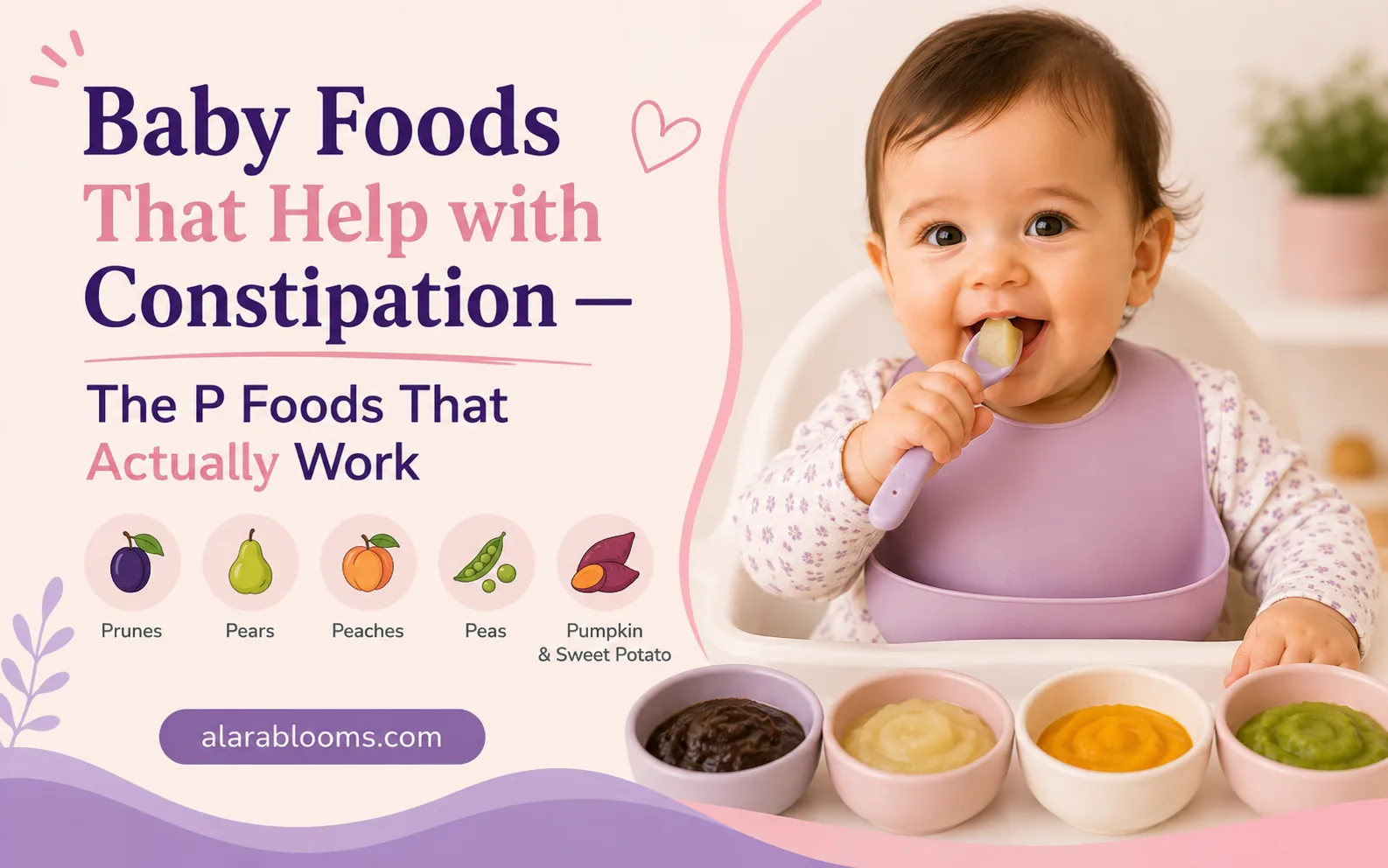
Starting solids is one of those parenting milestones that sounds straightforward on paper. In practice, it often comes with an unexpected side effect: your baby stops pooping normally. Stools become hard, dry, and difficult to pass. Your baby grunts, strains, and cries through what used to be a non-event. You start watching every diaper with more intensity than you expected.
Constipation after introducing solid foods is extremely common, and in most cases it responds well to dietary changes. The most well-known approach is using the P foods — a group of fruits and vegetables that have a natural laxative effect and can get things moving again without medication.
Why Constipation Happens When Starting Solids
Your baby's digestive system has spent its entire life processing breast milk or formula — both of which are highly digestible and produce soft, easily-passed stools. When solid food enters the picture, everything changes. The gut has to start working harder. Enzymes are recruited. Transit time slows down. And the types of stool your baby produces change significantly.
Several specific factors drive constipation during this stage. Iron-fortified cereals — especially rice cereal, which is a common first food — are low in fiber and known to be constipating. Low fluid intake is another factor: babies getting more food and less breast milk or formula may not be getting enough liquid to keep stool soft. And some foods that seem healthy, like cooked carrots and applesauce, are actually low in the kinds of fiber that promote regular bowel movements.
The result is stool that dries out in the colon and becomes hard and painful to pass — sometimes for days at a time.
What Constipation Looks Like in Babies
Not every change in stool frequency means constipation. Some babies naturally go every two to three days and are perfectly comfortable doing so. What matters is consistency, comfort, and the quality of the stool itself. Signs of true constipation include:
- Stools that are hard, dry, and pellet-like — not the soft, mushy consistency typical of a breastfed baby
- Visible straining, grunting, turning red, or crying during a bowel movement
- Going significantly less often than usual (especially if the stool, when it does appear, is hard)
- A firm or visibly distended abdomen
- Small streaks of blood on the surface of the stool from straining (mention this to your pediatrician)
The P Foods for Baby Constipation
Pediatricians have long recommended the "P foods" as a first-line dietary approach to baby constipation. Most of these foods are high in sorbitol — a naturally occurring sugar alcohol with a mild laxative effect — or contain specific types of soluble fiber that draw water into the colon and soften stool. The following eight foods are the most reliable options.
Prunes are the gold standard for baby constipation and the most effective P food. They're high in sorbitol, contain both soluble and insoluble fiber, and have a natural laxative compound called dihydrophenylisatin. Prune puree works quickly — often within 24 hours. It can be offered on its own or mixed into other purees to make it more palatable.
Pear puree is one of the gentlest options and works well for younger babies just starting solids. Pears are high in sorbitol and have a mild, sweet flavor most babies accept easily. Fresh pear puree, or jarred pear, both work. The skin contains additional fiber, but peel it for babies under 8 months.
Ripe peach puree contains both sorbitol and fiber that support bowel motility. Peaches blend smoothly and mix well with other purees like oatmeal or butternut squash. Use ripe, fresh peaches when in season, or canned peaches in 100% juice (not syrup) as a convenient alternative.
Plums share many of the same properties as prunes — they're the fresh form of the same fruit and contain sorbitol and fiber that help get things moving. Plum puree has a slightly tart flavor that some babies take to immediately and others need time to accept. Mixing it with a sweeter fruit like pear or peach can help.
Peas are a fiber powerhouse for babies and one of the few vegetables on this list. Green pea puree is high in both soluble and insoluble fiber, which adds bulk to stool and speeds up transit time. Many babies enjoy the mild, sweet flavor. Pea puree is also a good source of iron and protein, making it a nutritional double-win.
Papaya contains an enzyme called papain that aids protein digestion and supports overall gut motility. Ripe papaya puree is smooth, sweet, and easy on sensitive stomachs. It's a particularly good option for babies who also seem gassy or bloated alongside constipation, as papain has a gentle digestive-support effect.
Kiwi is one of the most fiber-dense fruits available and contains a unique enzyme called actinidin that supports digestive motility. It's best introduced around 8 months or later, once your baby has a wider food repertoire. Blend ripe kiwi with pear or banana to balance the tartness. Remove seeds and peel thoroughly before pureeing.
Broccoli is high in fiber and contains compounds that support healthy gut bacteria, which in turn support regular bowel movements. Steam until very soft, then blend with a little water, breast milk, or formula. Some babies take to broccoli quickly; others need it mixed with something sweeter like sweet potato or pear in the early stages.
How Much Prune Puree to Give
For babies 6 months and older experiencing constipation, most pediatricians suggest starting with 1 to 2 tablespoons of prune puree once or twice per day. This is enough to have a noticeable effect without overdoing it. Prune puree is potent — too much can cause loose stools or diarrhea, which is just as uncomfortable as constipation.
If prune puree alone isn't doing the trick after 24 to 48 hours, try combining it with pear puree, or alternate days with a different P food. For very young babies (4-5 months, if your pediatrician has approved early solids), stick to 1 teaspoon and work up gradually.
Other Helpful Tips
Beyond food: other ways to help
- Offer water between feedings. Babies 6 months and older can have small amounts of water — a few ounces per day. This helps keep stool soft and supports the fiber you're adding through food.
- Gentle belly massage. Place your baby on their back and use two fingers to make slow clockwise circles around the navel. Clockwise follows the direction of the large intestine and can help move things along.
- Bicycle legs. With your baby on their back, gently move their legs in a bicycle-pedaling motion for 30 to 60 seconds. This movement encourages peristalsis — the muscle contractions that move stool through the colon.
- Warm bath. A warm bath can relax the muscles around the digestive tract and may help trigger a bowel movement, especially if your baby tends to strain more when tense.
- Keep offering breast milk or formula. Don't reduce milk feedings when starting solids — adequate fluids are essential to preventing and resolving constipation.
Foods That Can Make Constipation Worse
Just as some foods help, others can contribute to or worsen constipation. These aren't foods to eliminate permanently — many of them are nutritious — but reducing them during a constipation episode makes sense.
Foods to limit when your baby is constipated
- Rice cereal. The most common first grain, rice cereal is low in fiber and one of the most constipating foods for babies. Swap it for oatmeal, which has significantly more fiber.
- Unripe banana. Unripe bananas are high in resistant starch and can slow digestion and harden stool. Ripe bananas — with brown spots — are generally fine. The riper, the better.
- Cooked carrots. Raw carrots have plenty of fiber, but cooking breaks it down. Cooked carrot puree is starchy and low in effective fiber, making it a poor choice during a constipation episode.
- Applesauce. Counterintuitively, applesauce is on the constipating side. It contains pectin, a soluble fiber that firms stool. It's part of the BRAT diet for diarrhea — which tells you a lot. Whole apple puree or apple juice can actually help, but smooth applesauce tends to work against you.
- White potato. Plain mashed potato is starchy and low in fiber. Add a little olive oil and some peas or broccoli if you want to serve it during a constipation episode.
When to call your pediatrician: Contact your baby's doctor if constipation lasts more than one week despite dietary changes, if your baby has blood in or on their stool beyond a small surface streak, if your baby is vomiting alongside constipation, if they seem to be in significant pain, or if constipation started after a dietary change you're unsure about. Never use suppositories, enemas, or laxatives without medical guidance for babies under 12 months.
Quick Prune Puree Recipe
Prune puree is one of the easiest baby foods to make from scratch, and homemade versions are often more effective than jarred products because they retain more of the natural sorbitol.
What you need
Dried prunes (pitted), water. That's it.
How to make it
Place 1 cup of pitted dried prunes in a small saucepan and cover with 2 cups of water. Bring to a boil, then reduce heat and simmer for 10 minutes until the prunes are very soft. Let them cool slightly, then transfer prunes and the soaking liquid to a blender. Blend until completely smooth, adding more water as needed to reach a thin, easily-spooned consistency. Store in the refrigerator for up to 4 days, or freeze in ice cube trays for up to 3 months.
One tablespoon of homemade prune puree contains significantly more sorbitol and fiber than a single serving of jarred product, and the liquid from cooking captures nutrients that would otherwise be lost.
Track Your Baby's Feeding Patterns
Log meals, note bowel changes, and spot patterns that help you understand your baby's digestion — in Alara Blooms.
Start Tracking Free