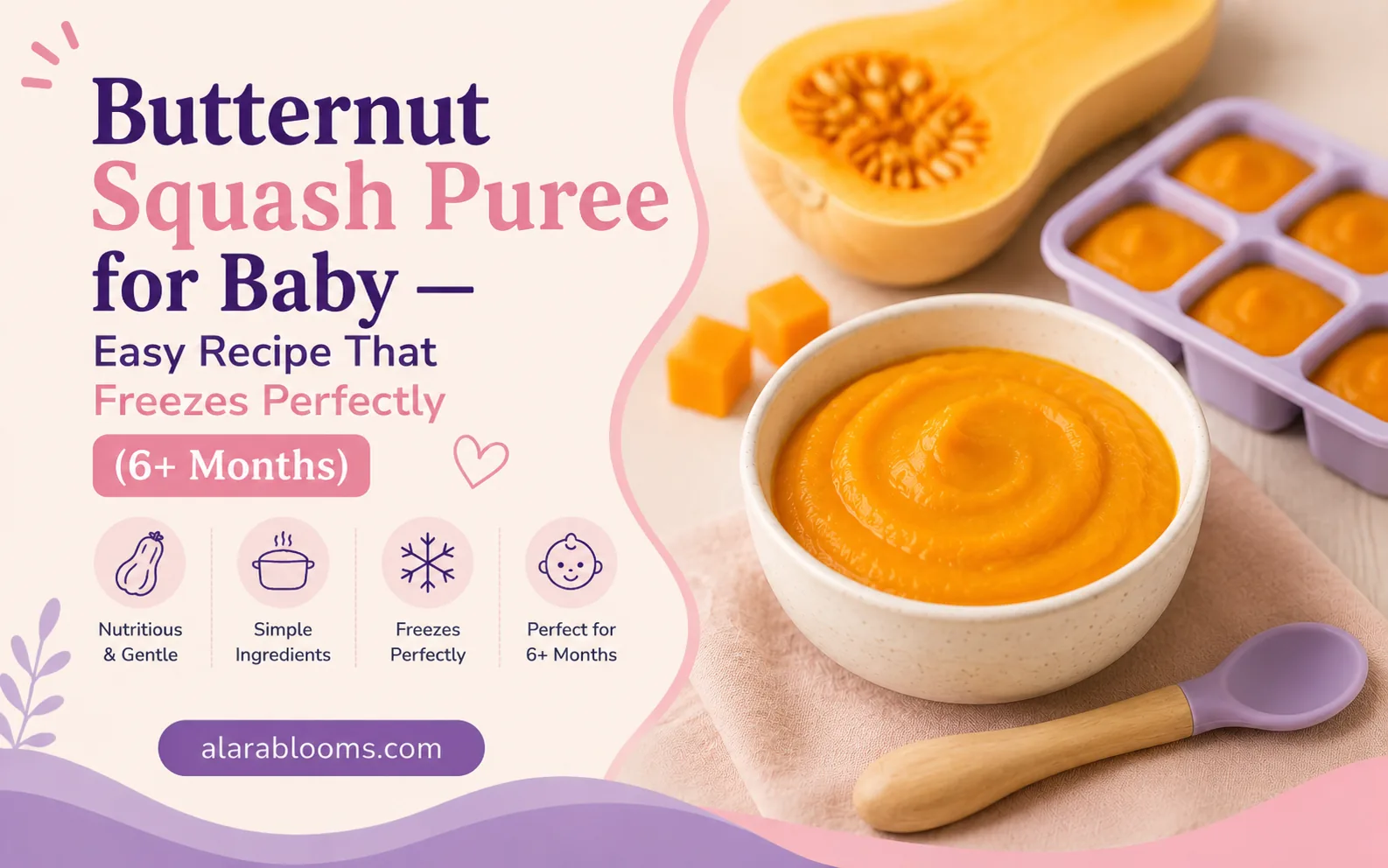
Butternut squash is one of those baby foods that checks every box. It's naturally sweet, which means babies tend to accept it well from the very first spoonful. It's packed with nutrients — vitamin A for eye and immune health, vitamin C, potassium, and fiber. It roasts beautifully, steams quickly, and freezes in a way that few purees can match. And one medium butternut squash can yield enough puree to fill an entire ice cube tray, giving you weeks of easy meals from a single cooking session.
Whether you're just starting solids or looking for new things to add to the rotation, butternut squash is worth knowing how to make well. Here's everything you need, from prep to freezer.
Why Butternut Squash Is a Great First Food
The deep orange color of butternut squash comes from beta-carotene, a pigment the body converts to vitamin A. Vitamin A is essential for eye development, immune function, and healthy skin — all of which matter a great deal in the first year. A single serving of butternut squash puree delivers a meaningful dose, making it one of the most nutrient-dense first foods you can offer.
Beyond vitamin A, butternut squash also provides vitamin C (which supports iron absorption and immune defense), potassium (important for heart and muscle function), dietary fiber (which helps prevent the constipation that often accompanies the introduction of solids), and a small amount of calcium. It's also one of the least allergenic foods there is — reactions to butternut squash are extremely rare, which is why it makes such a safe and logical first food.
Its natural sweetness is a practical advantage too. Babies come primed to accept sweet flavors — breast milk and formula are both on the sweeter end — so a naturally sweet vegetable like butternut squash gets a running start in terms of acceptance. Unlike some bitter greens that can take repeated exposure before a baby accepts them, squash typically lands well the first time.
When Can Baby Start Butternut Squash?
The American Academy of Pediatrics recommends waiting until around 6 months to begin solid foods, and butternut squash is a great option right at that milestone. Before you start, look for readiness signs beyond just age: your baby should be able to sit with minimal support, should have lost the tongue-thrust reflex (where they automatically push solids out with their tongue), should show interest when you eat, and should have good head and neck control. Age alone isn't the only signal.
Butternut squash works well as one of the very first foods, or it can be introduced after you've already established a few other purees. There's no strict order — what matters is introducing one new food at a time and watching for reactions over 3-4 days before adding another.
How to Prep and Peel Butternut Squash Safely
Butternut squash is notoriously difficult to cut. The skin is thick and hard, the shape is awkward, and raw squash can slip under the knife in a way that's genuinely dangerous if you're not prepared for it. A few strategies help considerably.
Safety tip: Before cutting, microwave the whole squash for 2-3 minutes to soften the outer skin slightly. Then use a large, heavy chef's knife and cut with controlled, deliberate strokes — not force or speed. Start by trimming both ends to create flat, stable surfaces. Then halve the squash lengthwise and scoop out the seeds with a spoon before you proceed to cooking or peeling. Never try to peel a whole, uncut squash — it's much safer to peel after halving or after cooking.
For most cooking methods, you don't even need to peel the squash before cooking — the flesh scoops easily away from the skin once cooked. This is both easier and safer than trying to peel it raw.
3 Ways to Cook Butternut Squash for Baby
All three methods produce excellent puree. The differences come down to flavor, nutrient retention, and how much time you have.
Preheat your oven to 400 degrees F. Cut the squash in half lengthwise, scoop out the seeds, and brush the cut side lightly with a neutral oil or leave it plain. Place cut-side down on a parchment-lined baking sheet. Roast for 30-35 minutes until the flesh is completely tender and a knife slides in with no resistance. Let cool slightly, then scoop the flesh away from the skin. Roasting concentrates the natural sugars through caramelization, giving the puree a noticeably deeper, sweeter flavor than other methods. If your baby tends to be a picky eater, this is your best option.
Peel and cube the raw squash into roughly 1-inch pieces. Place in a steamer basket over 1-2 inches of boiling water. Cover and steam for 10-15 minutes until completely soft. Steaming is the gentlest method — it doesn't leach water-soluble vitamins into cooking water the way boiling does, and it doesn't require any oil. The flavor is slightly more neutral than roasted squash, which some babies prefer and which makes it easier to pair with other ingredients. Save the steaming water to use as your blending liquid — it contains some of the nutrients that cooked out of the squash.
Pour 1 cup of water into the Instant Pot. Place a halved, seeded squash (or cubed squash in a steamer basket) inside. Seal the lid and cook on high pressure for 8-10 minutes for halved squash or 5-7 minutes for cubes. Quick release, let cool, and scoop or blend. The Instant Pot is the fastest option for batch cooking — if you're making puree for the freezer, this method gets you through the cooking step in under 20 minutes including come-to-pressure time. The texture is extremely soft and blends very smoothly.
Blending to the Right Consistency
Once your squash is cooked, scoop the flesh into a blender or food processor. Start the motor and add liquid gradually — water, saved steaming liquid, breast milk, or formula all work. Blend until smooth, stopping to scrape down the sides as needed.
The right consistency depends on your baby's stage. For stage 1 (around 6-8 months), you want a thin, pourable puree — similar in texture to a thick soup. For stage 2 (8-10 months), a thicker, more substantial texture is appropriate. Always add liquid in small amounts: it's much easier to thin a puree than to thicken it once you've added too much.
If you're using breast milk or formula, add it after the squash has cooled slightly so the heat doesn't degrade the antibodies and nutrients in the milk.
Stage Progression: From Puree to Table Food
Butternut squash adapts well to every stage of solid food introduction. In the early weeks, a smooth, thin puree is appropriate. As your baby develops more oral motor control — typically around 8-10 months — you can leave the puree thicker and more textured, with small soft lumps that encourage jaw movement. By 10-12 months, you can offer small, soft cubes of roasted squash that your baby can pick up with their fingers, which works beautifully for baby-led weaning (BLW) alongside or instead of purees. The key throughout is that the squash should be soft enough to mash between your thumb and index finger with gentle pressure.
Flavor Combos to Try
Butternut Squash Combinations
- Squash + apple: sweet and familiar, a great early combo that babies typically love
- Squash + pear: mellow sweetness with a slightly floral note — smooth and easy
- Squash + cinnamon: a tiny pinch of cinnamon adds warmth without overpowering; never use honey under 12 months
- Squash + lentil: adds plant-based protein and iron to a naturally sweet base — excellent nutritionally
- Squash + chicken: a classic first meat introduction; the squash sweetness balances the savory chicken well
- Squash + carrot: doubles up on beta-carotene and adds a slightly earthier flavor
- Squash + ginger (tiny amount): a very small pinch of ground ginger adds complexity for babies who have already accepted several flavors
When combining foods, make sure each ingredient has already been introduced individually and observed for reactions before mixing. Once you've cleared both ingredients, feel free to blend them together in whatever ratio your baby seems to enjoy.
Freezing and Batch Cooking
Butternut squash is one of the best purees for freezing. It holds its texture and flavor through the freeze-thaw cycle much better than watery vegetables like zucchini, and it doesn't discolor the way some purees do.
Freezing and Storage Guide
- Spoon freshly made puree into a clean ice cube tray — each cube is approximately 1 oz
- Cover the tray with plastic wrap or a silicone lid and freeze until solid (4-6 hours or overnight)
- Pop the frozen cubes into a labeled freezer bag or airtight container — include the date and contents
- Frozen puree keeps for up to 3 months at peak quality
- Thaw in the refrigerator overnight, or in a small bowl set in warm water
- Use thawed puree within 24 hours — never refreeze puree that has been thawed
- One medium butternut squash (about 2-2.5 lbs) yields approximately 2-3 cups of puree, or 30-36 ice cubes
Making one large batch on the weekend and freezing the cubes means you can pull out exactly what you need each day without any cooking. For a 6-month-old eating 2-3 tablespoons per sitting, a single ice cube tray can last 2-3 weeks. It's one of the most efficient things you can do in baby food prep.
Track Your Baby's First Foods
Log every new food you introduce, track reactions, and build a solid feeding history — all in Alara Blooms.
Start Tracking Free